
2010 Summer Session on Contemplative Curriculum Development:
Information for Participants
Agenda | Check-In Schedule | Reading List | Faculty & Staff
Travel Information | Accommodations & Meals
August 8 - 13, 2010
Smith College, Northampton, MA
Agenda
Check-In Schedule
Sunday, August 8th
2:00 - 5:00 Check-in & Welcome, Chapin House
5:00 - 5:30 Reception, Chapin House
5:30 - 7:00 Dinner, Lamont House Dining Room
7:00 - 9:00 Opening Circle: Introductions, Agenda Review, and Program Goals, Neilson Library, Neilson-Browsing Room
Reading List

|
From Arthur Zajonc: |
Love and Knowledge: Recovering the Heart of Learning through Contemplation |
|
|
|
|
|
|
|
|
|
Khaled Hosseini, |
|
Ian McEwan, |
|
Chimamanda Ngozi Adichie, |
|
(Hosseini's and McEwan's novels are also available on Books on Tape) |
|
|
|
|
|
|
Wallace Stevens, |
|
Simone Weil, |
 , especially chapters 4 and 5. There is a digital version on the web:
  (1994)
  (2007)
  (2001)
  (2006) This extraordinary young novelist, winner of multiple international literary awards, recreates in memory a story of Biafra that happened long before she was born.
  , “Contradiction,” pp. 151-157
2010 Faculty & Staff
Linda-Susan Beard
Associate Professor of English, Bryn Mawr College
Carrie Bergman
Artist
Webmaster, The Center for Contemplative Mind in Society
Mirabai Bush
Associate Director and Senior Fellow, The Center for Contemplative Mind in Society
Geri DeLuca
Professor of English, Brooklyn College of the City University of New York
Renée Hill
Associate Professor of Philosophy, Virginia State University
Sunanda Markus
Yoga Instructor
Academic Program Coordinator, The Center for Contemplative Mind in Society
Peter Schneider
Professor of Architecture and Chancellor’s Scholar, University of Colorado
Joel Upton
Professor of Art and Art History, Amherst College
Beth Wadham
Academic Program Associate, The Center for Contemplative Mind in Society
Arthur Zajonc
Professor of Physics, Amherst College
Director, The Center for Contemplative Mind in Society
Faculty Bios
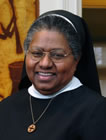 Linda-Susan Beard (Ph.D., Cornell) negotiates between and among the worlds of African American, South African, and post-colonial literatures. She teaches courses on post-apartheid literature, literary and historical reimaginings of transatlantic slavery such as Toni Morrison and the Art of Narrative Conjure, as well as introductory courses in English and African literatures which examine the dynamics of canon formation. She is editing the first comprehensive volume of the letters of Bessie head, about whom she has written essays and given conference papers for 25 years. She is also involved in the new area of contemplative intelligence, having been in the first group of the Center’s Contemplative Practice Fellows. King's College recently awarded her an honorary doctorate for her work in integrating contemplative and intellectual ways of knowing. She served for five years as Faculty Coordinator of the Mellon Scholars Program and chair of the Africana Studies Program.
 Carrie Bergman designs and manages the Center for Contemplative Mind in Society's websites and generally serves as a "technology facilitator" for the Center. Carrie graduated from Dickinson College with degrees in Studio Art and Anthropology and subsequently worked for Dickinson's museum and art department. She began her study and practice of Tibetan Buddhism in 1996. In 1998, she began to incorporate mindfulness and visualization practices into her art-making processes. Influenced by these contemplative practices and a spiritual response to nature, she makes miniature landscape paintings and larger works depicting stories about relationships between people, animals, and other elements of nature. Her work has been shown at the Bromfield Gallery in Boston, Hannah Clark in New York, and in local galleries near her home in Western Massachusetts.
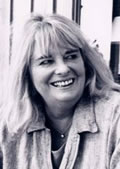 Mirabai Bush was a co-founder of the Center for Contemplative Mind in Society and served as Executive Director until 2008. Under her direction, The Center developed its programs in education, law, business, and activism and its network of thousands of people integrating contemplative practice and perspective into their lives and work.
Mirabai holds a unique background of organizational management, teaching, and spiritual practice. A founding board member of the Seva Foundation, an international public health organization, she directed the Seva Guatemala Project, which supports sustainable agriculture and integrated community development. Also at Seva, she co-developed Sustaining Compassion, Sustaining the Earth, a series of retreats and events for grassroots environmental activists on the interconnection of spirit and action. She is co-author, with Ram Dass, of Compassion in Action: Setting Out on the Path of Service, published by Random House.
Mirabai has organized, facilitated, and taught workshops, weekends, and courses on spirit and action for more than 20 years at institutions including Omega Institute, Naropa Institute, Findhorne, Zen Mountain Monastery, University of Massachusetts, San Francisco Zen Center, Buddhist Study Center at Barre, MA, Insight Meditation Society, and the Lama Foundation. She has a special interest in the uncovering and recovery of women's spiritual wisdom to inform work for social change. She has taught women's groups with Clarissa Pinkola Estes, Sharon Salzberg, Joan Halifax, Margo Adler, Starhawk, Jean Shinoda Bolen, Vicky Noble, and other leaders.
Her spiritual studies include meditation study at the Burmese Vihara in Bodh Gaya, India, with Shri S.N. Goenka and Anagarika Munindra; bhakti yoga with Hindu teacher Neemkaroli Baba; and studies with Tibetan lamas Kalu Rinpoche, Chogyam Trungpa Rinpoche, Kyabje Gehlek Rinpoche, Tsoknyi Rinpoche, and others. She also did five years of intensive practice in Iyengar yoga and five years of Aikido with Kanai Sensei. Her earlier religious study included 20 years of Catholic schooling, ending with Georgetown University graduate study in medieval literature. She holds an ABD in American literature from the State University of New York at Buffalo.
Before entering the foundation world, Mirabai was the first professional woman to work on the Saturn-Apollo moonflight at Cape Canaveral and later co-founded and directed Illuminations, Inc., from 1973 to 1985 in Cambridge, MA. Her innovative business approaches, based on mindfulness practice, were reported in Newsweek, Inc., Fortune, and the Boston Business Journal. She has also worked on educational programs with inner-city youth of color.
Mirabai has trekked, traveled, and lived in many countries, including Guatemala, Mexico, Costa Rica, India, Nepal, Morocco, Ireland, England, Scotland, Afghanistan, Iran, Turkey, Germany, Austria, Italy, Pakistan, and the Caribbean. She is an organic gardener in Western Massachusetts and the mother of one adult son, Owen.
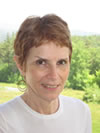 Geri DeLuca just retired as a professor of English at Brooklyn College, CUNY. She now lives mostly in Vermont, where she is writing both fiction and a series of essays on the uses of contemplative practice in the classroom. A contemplative practice fellow in , she learned quickly how hungry her students were for a mindful, less competitive pedagogy. That pedagogy has included more insistently over the years a respect for students' own language and a wariness of the assumption that one must correct students to prepare them for the real world. Her presentation/workshop addresses the huge, but often unconsidered question of how dialect plays out in classrooms: what includes and what alienates students, what the repercussions are of that alienation, and how we can begin to nudge that bogey-man of the "real world" toward a wider consciousness of who really lives there.
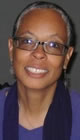 Renée Hill is an Associate Professor of Philosophy at Virginia State University. Her area of specialization is Political Philosophy, and for twelve years she was Co-Director of the Institute for the Study of Race Relations at VSU. She has practiced meditation for over thirty years, and she and the other Institute Co-Director are currently developing a graduate program in Justice and Transformation, focusing on personal and community transformation through the study of social activism and contemplative practices. Hill is a board member of the Richmond Peace Education Center, and is working with the Virginia Foundation for the Humanities to develop programs using contemplative practices to ameliorate the effects of violence.
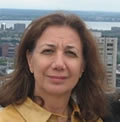 Sunanda Markus has served as program coordinator for the Academic Program of the Center for Contemplative Mind in Society for 8 years. She also works as the Managing Director of Nights Publications Inc. in Montreal, Quebec.
Her non-profit experience includes serving on the boards of the Seva Foundation, Seva Service Society, the Insight Meditation Society, the Eyak Preservation Council, and the Learning Alliance. As a board member for Seva Foundation she served as chairperson for 3 years and was also an active member of the Seva Guatemala Project which supports integrated community development.
She took her first course in meditation in 1972 in India with the Theravadan Buddhist teacher Shri S.N. Goenka and has been a student of Vipassana meditation since then. She also studied bhakti yoga in India with Hindu teacher Neemkaroli Baba and has been a student of yoga for fifteen years.
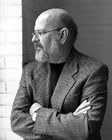 Peter Schneider was born and educated in South Africa, where he taught and practiced architecture before moving to the United States in 1977. He is currently Professor of Architecture and Chancellor’s Scholar at the University of Colorado, and teaches architectural and environmental design and theory at the university’s Boulder and Denver campuses. His scholarly and research interests have been focused on the history of the architect: on the architect’s mind, motives, manners, and mythologies and in the way that these attitudes have shaped the discipline’s traditions. His particular focus has been on exploring and understanding the persistent influence that the practices of contemplatio and meditatio – both terms rooted in architecture’s ancient history - have had on the shapes and forms of contemporary architectural practice. His writings on the history of the architect, architectural pedagogy, the interactions of building and landscape, and the architect's contemplative methods and practices have been widely published, as have his researches into the work of the young American architect, Douglas Darden.
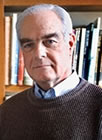 Joel Upton is Professor of Art and Art History at Amherst College. After graduation from Rutgers University his path led from the U.S. Air Force to the Goethe Institute in Berlin, and in 1972 to Amherst. He teaches courses on the history of Medieval and Renaissance art and architecture, Japanese pre-modern architecture and the spiritual foundations of artistic aspiration. His teaching interests include the theory and practice of contemplative “beholding” and his current research concerns Ai-no-ma, a Japanese architectural and spatial concept that is a Japanese equivalent of the art of beholding.
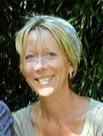 Beth Wadham joined the Center as Academic Associate to support the existing program and develop new initiatives. She is a former restaurateur and teacher of high school literature in a Waldorf School, and in between had the opportunity to work with Arthur Zajonc, Academic program director, to bring forward The Barfield School of Sunbridge College, a new graduate school that integrates art, academic research and contemplative inquiry.
She earned her BA in Literature from Smith College, where she completed an honor's study of William Blake, and has a teaching certificate from the Waldorf Teacher Training Institute, where she developed courses on the history of language; reading and writing poetry; Melville's Moby Dick; and the Bible.
Her abiding interest in the contemplative dimension of life started early, probably while gazing at the stars in the night sky, and has been nurtured by meetings with kindred spirits and study and practice in diverse traditions such as anthroposophy and yoga. As part of the Center staff, she welcomes the chance to bring the values of contemplative practice wider and deeper into the mainstream culture.
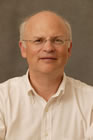 Arthur Zajonc is professor of physics at Amherst College, where he has taught since 1978. He received his B.S. and Ph.D. in physics from the University of Michigan. He has been visiting professor and research scientist at the Ecole Normale Superieure in Paris, the Max Planck Institute for Quantum Optics, and the Universities of Rochester and Hannover. He has been Fulbright professor at the University of Innsbruck in Austria. As a postdoctoral fellow at the Joint Institute for Laboratory Astrophysics he researched electron-atoms collision physics and radiative transfer in dense vapors. His research has included studies in parity violation in atoms, the experimental foundations of quantum physics, and the relationship between sciences, the humanities and contemplation. He has written extensively on Goethe's science. He is author of the books Meditation as Contemplative Inquiry, Catching the Light, co-author of The Quantum Challenge, and co-editor of Goethe's Way of Science. In 1997 he served as scientific coordinator for the Mind and Life dialogue with H.H. the Dalai Lama published as The New Physics and Cosmology: Dialogues with the Dalai Lama (Oxford 2004). He again organized the 2002 dialogue with the Dalai Lama, “The Nature of Matter, the Nature of Life,” and acted as moderator at MIT for the “Investigating the Mind” dialogue in 2003 (see). He has also been General Secretary of the Anthroposophical Society in America (), president of the Lindisfarne Association, and a senior program director at the Fetzer Institute.
Travel Information
How to get to Chapin House, Smith College:
By Car
From the South: Northampton is on Route I-91 in Massachusetts. Take Exit 18, and follow Route 5 north into the center of town. Turn left onto Route 9. Go straight through four traffic lights, turning left into Smith’s main entrance (College Lane) shortly after the fourth set. The first left, a campus roadway, leads to the central campus and Chapin House is on the right, across from the student center.
Parking permits will be distributed at registration. Short-term parking is available near the Admission Office on your right after turning into the main entrance off of Route 9 (College Lane).
From the North: From I-91 South, take Exit 20, and follow onto Route 5 south into the center of town. At the intersection of Route 5 and Route 9 (Main Street), turn right onto Route 9. Then follow the same directions as above from Route 9 to Chapin House.
From the East or West via the Massachusetts Turnpike: Northampton is on Route I-91 North (Mass Pike exit 4). Once on I-91, follow the directions above for visitors from the south.
By Air
The closest airport is Bradley International. It is served by most major airlines and is located about 40 miles south of Northampton near Hartford, Connecticut; the driving route to Northampton is a straight shot north on I-91. Flying into Bradley rather than to Boston’s Logan Airport gives you a shorter drive to Northampton and spares you city traffic congestion. Allow at least 2 - 2 ½ hours to leave Northampton for your return flight: it takes about 40-50 minutes to drive to the airport (car rental returns may add 30 minutes), which leaves you ample time for check-in. Bradley Airport is a small, efficient operation, but peak travel hours may delay your check-in.
Limousines, buses, and rental cars are available at the airport. Transportation to Smith College from the Hartford airport is also available from Seemo Shuttle, Valley Transporter or Michael’s Limousine Services.
Seemo Shuttle can be reached at or . The cost for a 1-person trip to or from Bradley is $42; if 2 people make a reservation together, the cost is $74; every extra person is an additional $15.
Valley Transporter can be reached at , or from outside the 413 area code dial . Rates are approximately $50 each way. The transporter runs from Boston, but it's about $200; NYC is $275 including gratuity.
Michael’s Limousine Services can be reached at or .
By Bus
Peter Pan, Greyhound and Vermont Transit serve the area. Most routes go to the main bus terminal in Springfield, where you can catch another bus to Northampton. Buses run almost hourly between Springfield and Northampton. Smith College is a 5-minute walk or a short taxi ride from the bus station; the taxi station is right next to the Northampton bus "depot". ; ; .
By Train
Amtrak - - runs trains to Springfield from various locations.
From Springfield you can take a bus or get van service to Northampton from Valley Transporter. Valley Transporter requires advance reservations; call or ;
Accommodations & Meals
Participants will stay at Chapin House, a one-hundred-year-old (but recently renovated, and air-conditioned) house centrally located on campus. Chapin is across from the student center and overlooks the gardens of Lyman Plant House and Paradise Pond.
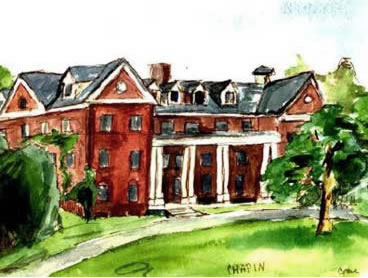
Chapin House by Kathleen Crowe ‘99
All rooms are singles, but in dormitory style bathrooms are shared. Each floor has one large bathroom; women and men will stay on different floors. Sheets and pillowcases are of the most basic variety, so if you prefer greater creature comforts, you may wish to bring something more familiar. There are coin-operated laundry facilities on the first floor. There is internet access in each room. Please bring an Ethernet cable to connect to the web. Wireless access is available in some locations including nearby Neilson Library and the Student Center.
Meals from dinner on Sunday, August 8 through breakfast on Friday, August 13 will be at Lamont House on Prospect Street across from John M. Greene Hall.
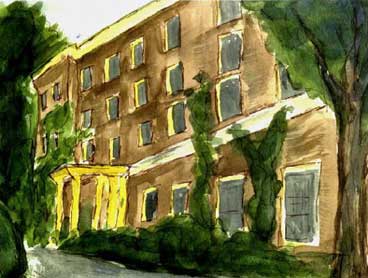
Lamont House by Kathleen Crowe ‘99
A map of Smith College is available at .
If you have any questions, please contact Beth Wadham, Academic Program Associate, at or at .